We’re currently recruiting Trustees and a Co-Chair to join our Board. Apply today, to find out more, click here.


Subira Joy on making Joy Nduku
Fri 8 May 2020
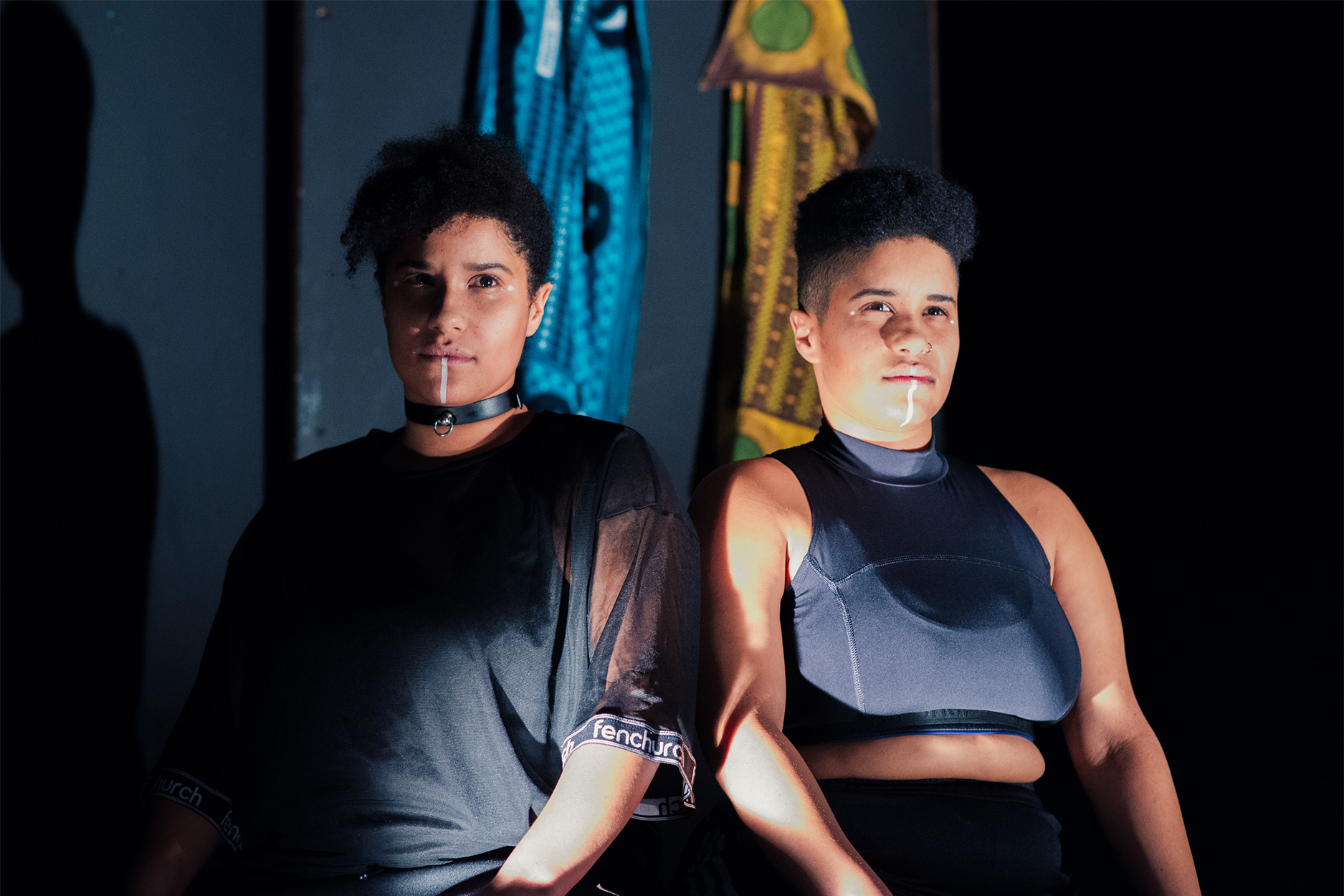
The first in a series of blogs reflecting on our national touring and artist development programme New Queers on the Block
Developing Joy Nduku was a process of newness and learning. For the both of us (myself and my twin Wandia Nduku), it was our first collaborative piece. Imposter syndrome was strong; feeling like I’m not experienced enough to do the work, feeling self-conscious about the process of creating, feeling all the ways in which white patriarchal cishet supremacy tells me I’m not good enough. There were a lot of moments where I felt like I didn’t really know what I was doing but neither did Wandia, so we were just trying things until something stuck.
It was important for me to create a piece of work with Wandia that looked at our relationship as twins, our identities and experiences. Up until this point, none of my work really touched on my experiences as a twin, and only the most recent work braved the topic of my identity as non-binary; strangely glaring gaps when pretty much all of my work is self-reflective. We’d been talking recently about how interesting it is that our sexualities and gender identities, ephemeral, changing, ever developing over the years had come to a place of identicality. And despite living so far from each other (they’re based in Hamburg), how we’re so much closer and understand each other more now. How our childhood experiences shaped how we relate to each other and the world, reflecting on our experiences as young bodies of marginalised gender and race, and how impossible all that was to untangle from the ‘twin stuff’. And honestly, we both borrow each-others work so often – it was about time we tried making something together.
Subira in Joy Nduku at the Marlborough Theatre, Feb 2020. Photo: Reuben & Jay
I’m so grateful to have had the chance to do this, because, even though it was hard, we broke through to some beautiful moments. It was challenging in that both of our moments of being insecure or self-critical spilled out onto the other, and, given the closeness of our relationship, it was tricky to keep it professional. Like, when you feel a bit low or insecure in a creative space with people you have a working relationship with, you just tell yourself to shake it off, and get on with the work. But when the only other person in the room is your twin, it’s hard to stay in work mode, and not let yourselves get caught up in emotional sibling dynamics. That is to say we argued a LOT. I guess we ultimately moved through it by allowing ourselves to be fluid with the boundaries of working on our relationship and creative work (sometimes useful, sometimes a bit too intense), staying strong on communication, by bringing moments of ritual into the rooms we were working in, and through the invaluable advice we were given by the people who were able to work with us during the residencies.
I’m immensely grateful to the artists and creatives who worked with us, having these experienced, incredible folks in the room with us elevated the work to a really exciting level. Extra special thanks go to Travis Alabanza, Malik Nashad Sharpe, Mwen, and Lewis Dolan (there were loads more people but I don’t have the word count to name everyone). I’d not had much experience of working with a team in that way, so it was a huge learning curve and kinda terrifying. And I’m asking myself why it was so scary for me to let other people into a process. Because they see all the raw and the undeveloped and the messy and the bad? Because no-one ever taught me how to do this? Letting artists and creatives that you have placed on well-deserved pedestals into the process of making a thing when you’re full to the brim with doubt is absolutely mortifying. Everyone was all really good at allaying these fears and feelings once they were in the room, but I know what I’m like, and when I feel awkward I tend to do this dance of being so much bigger and more confident and louder than I feel and I wonder how often that got in the way of the work.
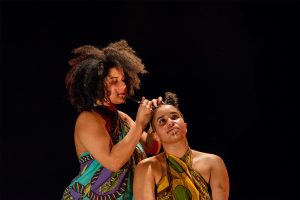
Wandia and Subira in Joy Nduku Photo: Reuben & Jay
The first day Travis was working with us, they asked us “how much of a domme do you want me to be?” and we laughed, but that was such a valuable question to start a working day off with, because then we could all navigate what we needed and expected from each other without assumption. Having folks with expertise in areas I really didn’t have a clue about (movement, sound, light etc) working with us was really cool and confusing and I learnt so much. I learnt about letting things go, not shoehorning things in just because you like it, asking yourself hard questions, giving yourself real answers. I learnt about how to pick up a moment and shake it until you get what you want from it. To let go of being so literal. To breathe and stop and own the moments. To do something upside down or backwards or on the other side of the stage sometimes, just to see. To justify it to yourself before you justify it to other people.
It was so important to get the perspectives of people all coming from slightly different directions, because it was so easy for me and Wandia to just get lost in our own world and then we can’t figure out what’s still interesting to anyone who isn’t us. It was so valuable to have predominantly queer Black trans creatives in the room; I could hear the questions and critique without the worry of “yeah but you’re saying that bc you don’t get it”, or “you’re being nice about it bc you don’t wanna be #problematic”. Having moments of the show that were so personal being tended to by people I could trust to have compassion and understanding for where we were coming from as queer Black trans folks was a big deal. And it’s so exciting how all these other voices and understandings of the work can flesh out an idea in ways we would never have got to by ourselves, and how their ideas and critiques and re-imaginings became so formative to what we were doing.

Subira at our New Queers Folkestone Weekender. Photo: Manuel Vason
Doing this all as a part of New Queers on the Block felt like an anchor grounding our weird floaty vague process. Presenting excerpts in Folkestone, and the work in progress in the Marlborough felt like it kept me in the loop and connected with artists and audiences. Being able to be in the Marlborough for a lot of the residency time, and having other NQOTB artists around, meant that we could connect, and run ideas past each other and help each other out with small moments, which made this project feel like it was in community with queer folks, queer art and queer artists, which ultimately is the whole point, right?
Marlborough Productions’ David Sheppeard: “It’s been so thrilling to witness Subira’s artistic development over the last few years, their power and presence seems to grow every time I see them on stage. Part of the joy of New Queers has been supporting artists at different career stages and in Subira’s case it feel like they’re embarking on such an exciting journey. Diverse voices that boldly engage with the complicated intersections of sexuality, gender, race and ethnicity are vital in expanding our understanding of life in this society, but we also need to recognise the toll it can take on these creators and do better as a sector to support them and the specific challenges they face.”